
Combining a Knowledge Base with Ontology RAG (Retrieval-Augmented Generation) is a pioneering and breakthrough approach to building Explainable AI (XAI) systems.
In recent years, generative artificial intelligence models such as ChatGPT have made major advances in human-computer interaction. However, one of the important challenges facing AI today is accuracy, the ability to verify information, and the ability to explain how answers are derived.
To address this issue, many researchers and technology companies are turning toward combining Knowledge Graphs, Ontology, and Retrieval-Augmented Generation (RAG) to build AI systems capable of reasoning based on standardized knowledge.
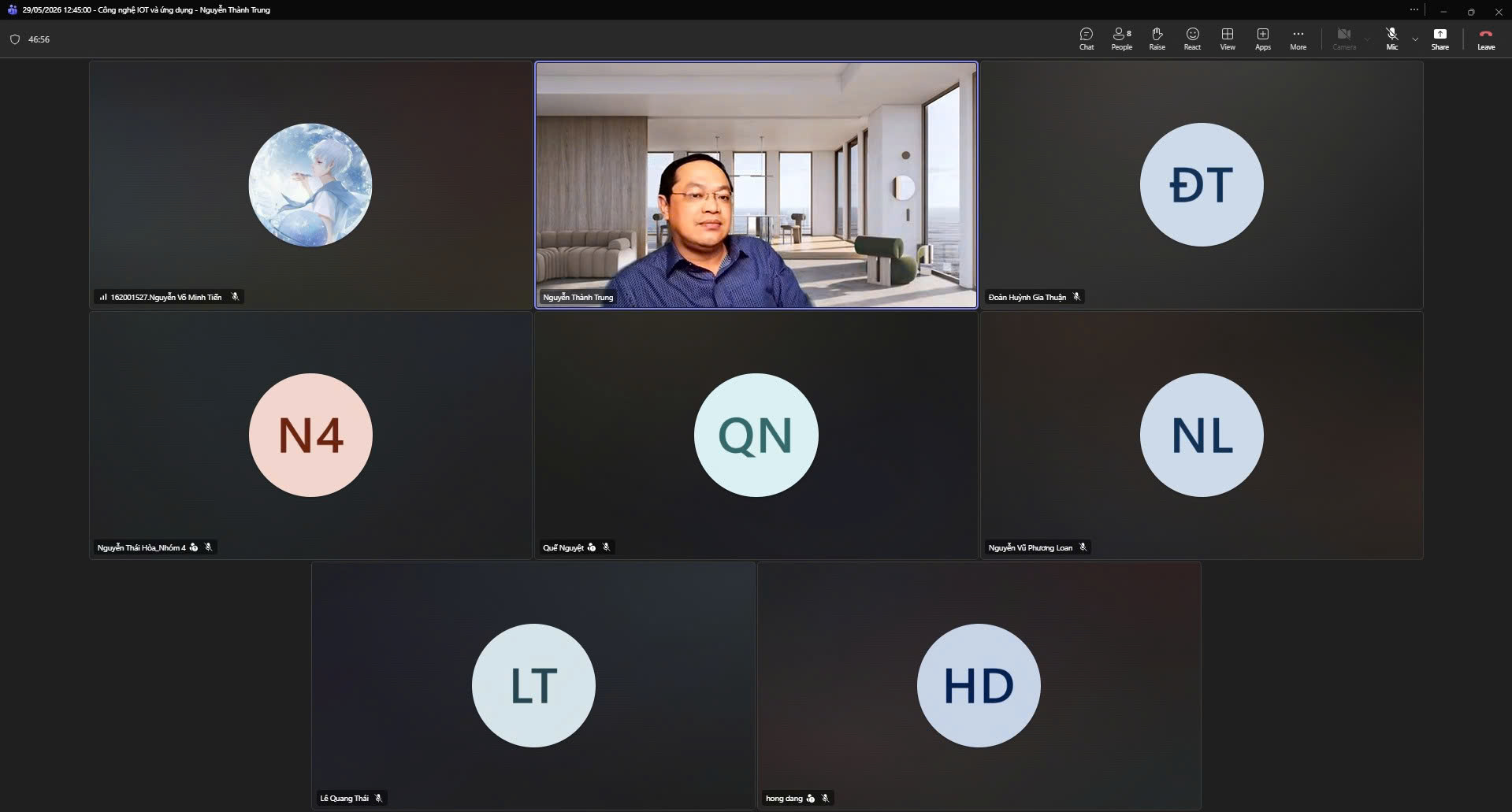
To help students access these advanced technologies, the Knowledge Base Systems course, taught by Dr. Bui Danh Thuong, introduced modern methods of building knowledge bases, from theory to practical implementation.
Ontology – the “common language” of knowledge
Ontology is regarded as the foundation of the Semantic Web, allowing the description of concepts, properties, and relationships among objects within a specific knowledge domain.
Instead of storing data in traditional table format, Ontology helps systems understand the meaning of data and the connections between them. This enables AI systems to perform logical reasoning, retrieve information accurately, and reduce unsubstantiated answers.
From data to structured knowledge
During the course, students were introduced to important technologies such as:
- RDF (Resource Description Framework)
- OWL (Web Ontology Language)
- SPARQL Query Language
- Knowledge Graph
- RDFLib and Python
- SHACL Validation
- Ontology RAG Pipeline
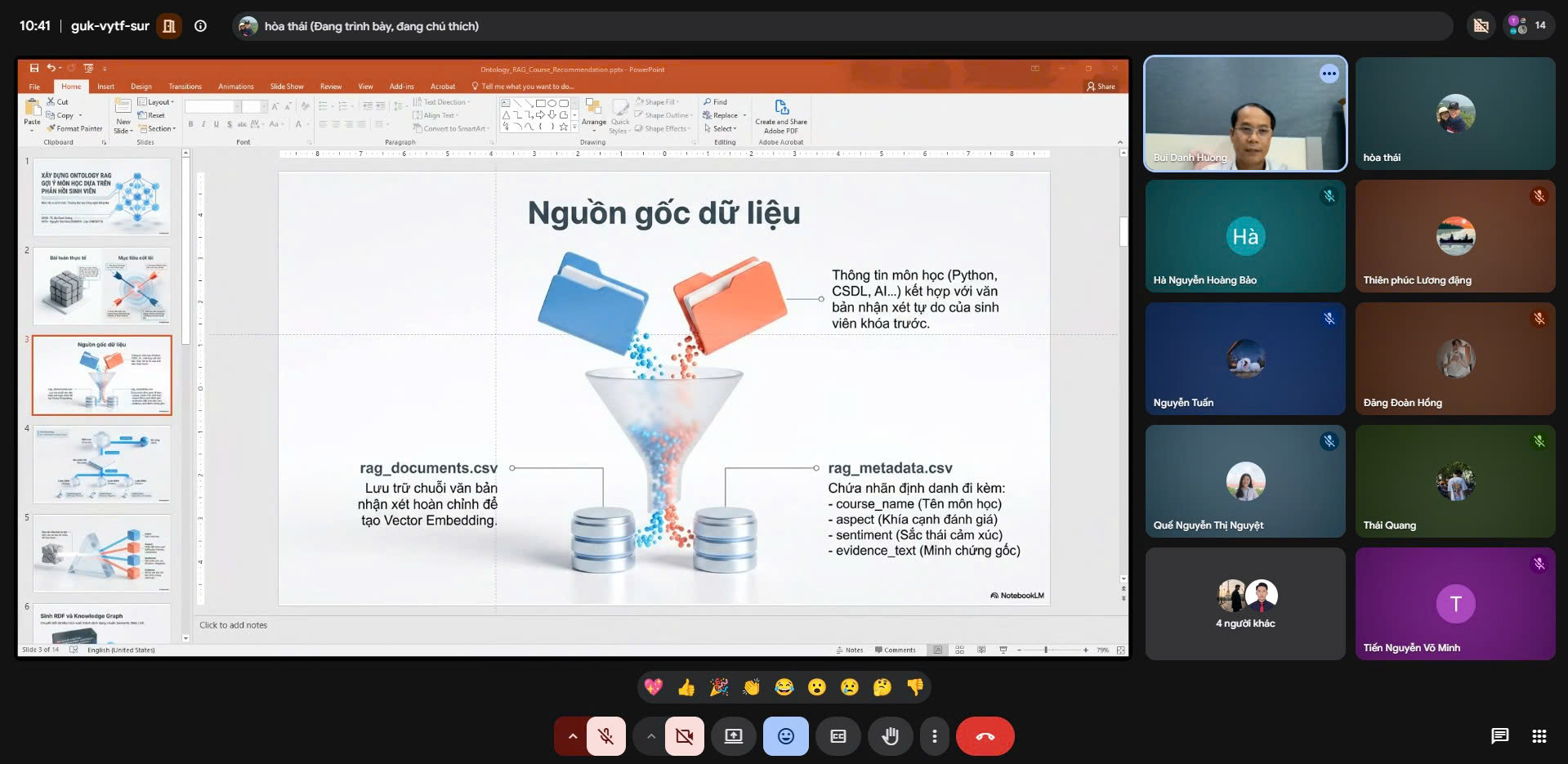
Through hands-on examples, students were guided on how to convert raw data into RDF Triples, build knowledge graphs, and perform semantic queries using SPARQL.
Ontology RAG – a new stage in AI development
One of the highlights of the course is the Ontology RAG model.
Unlike traditional RAG systems, which rely solely on similar-text search, Ontology RAG allows systems to retrieve information based on standardized knowledge structures. This helps AI not only find relevant data but also understand the relationships between objects within the knowledge base.
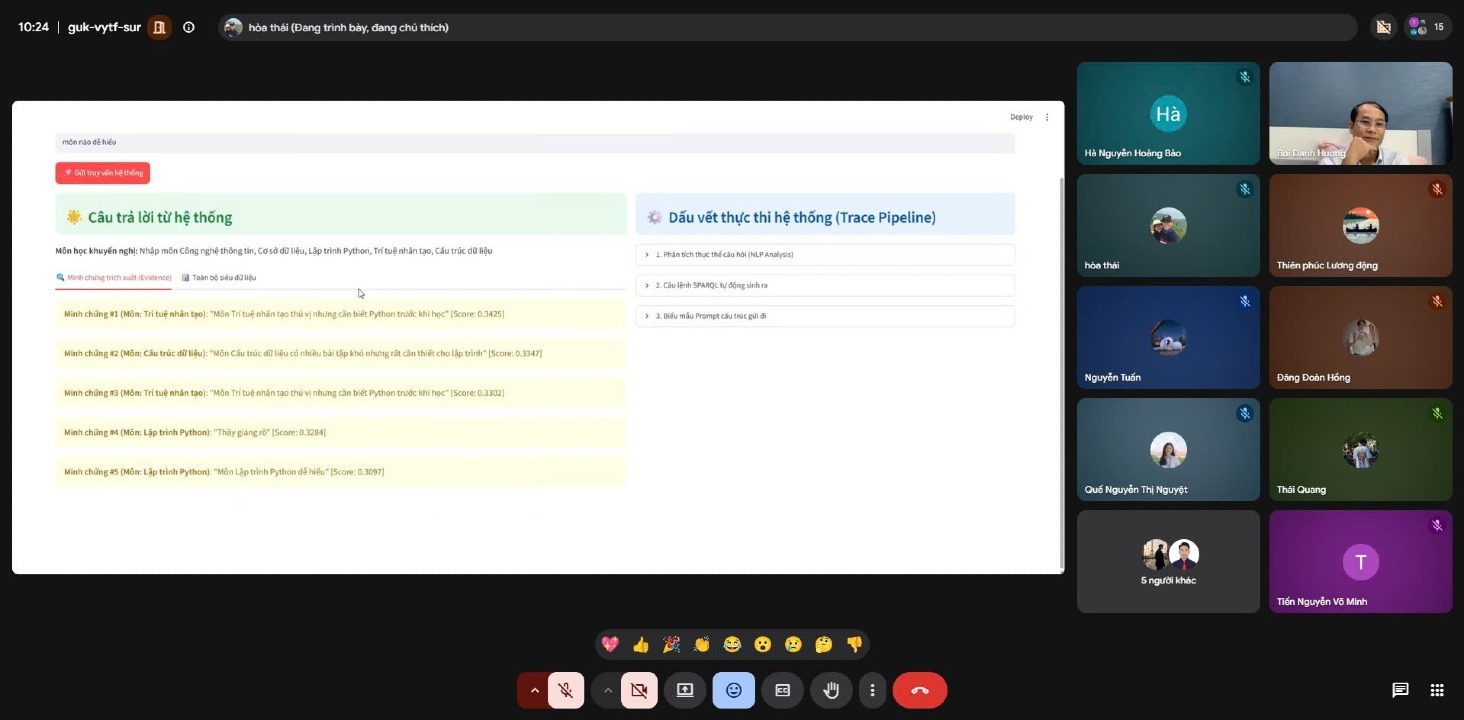
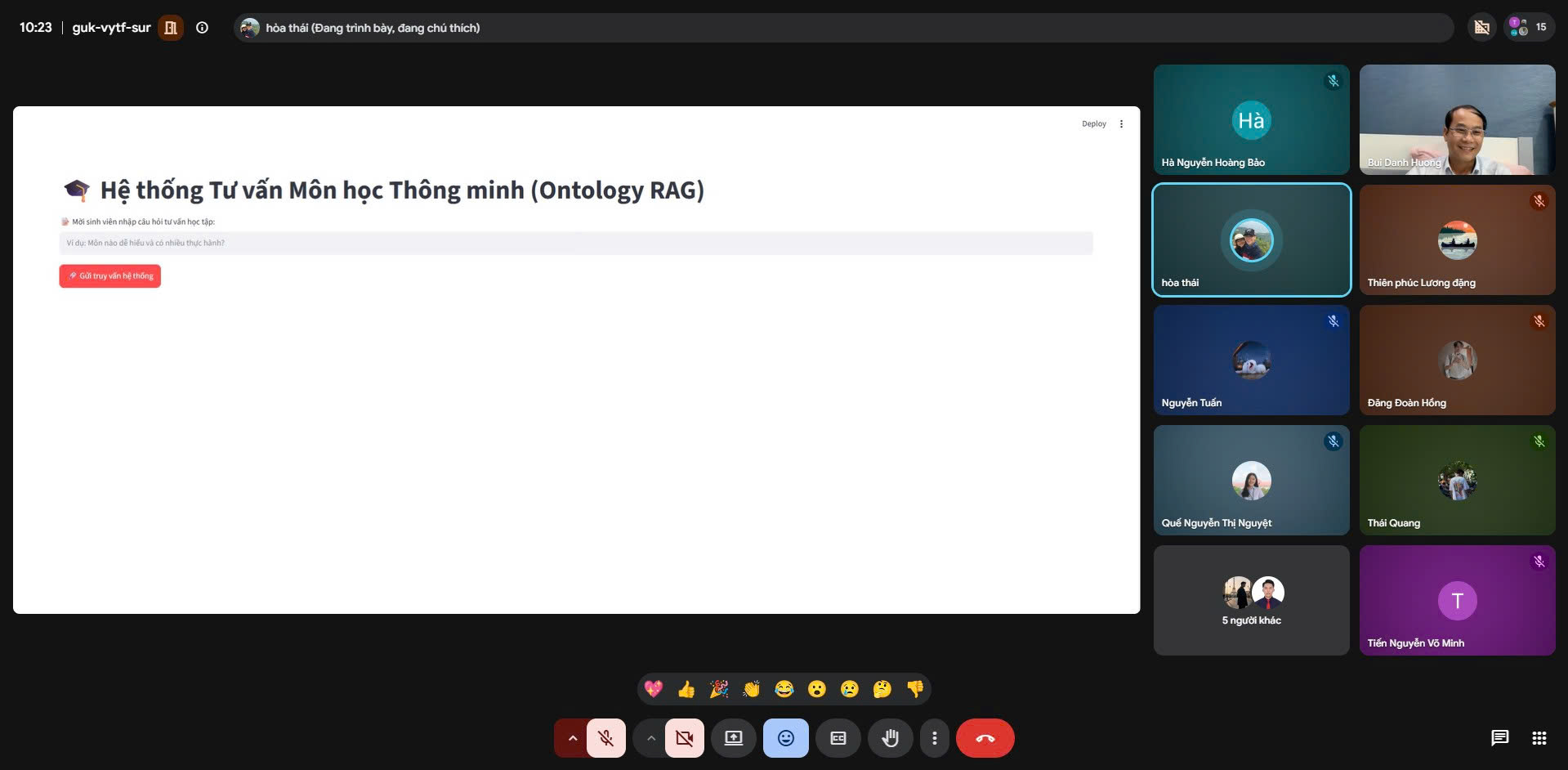
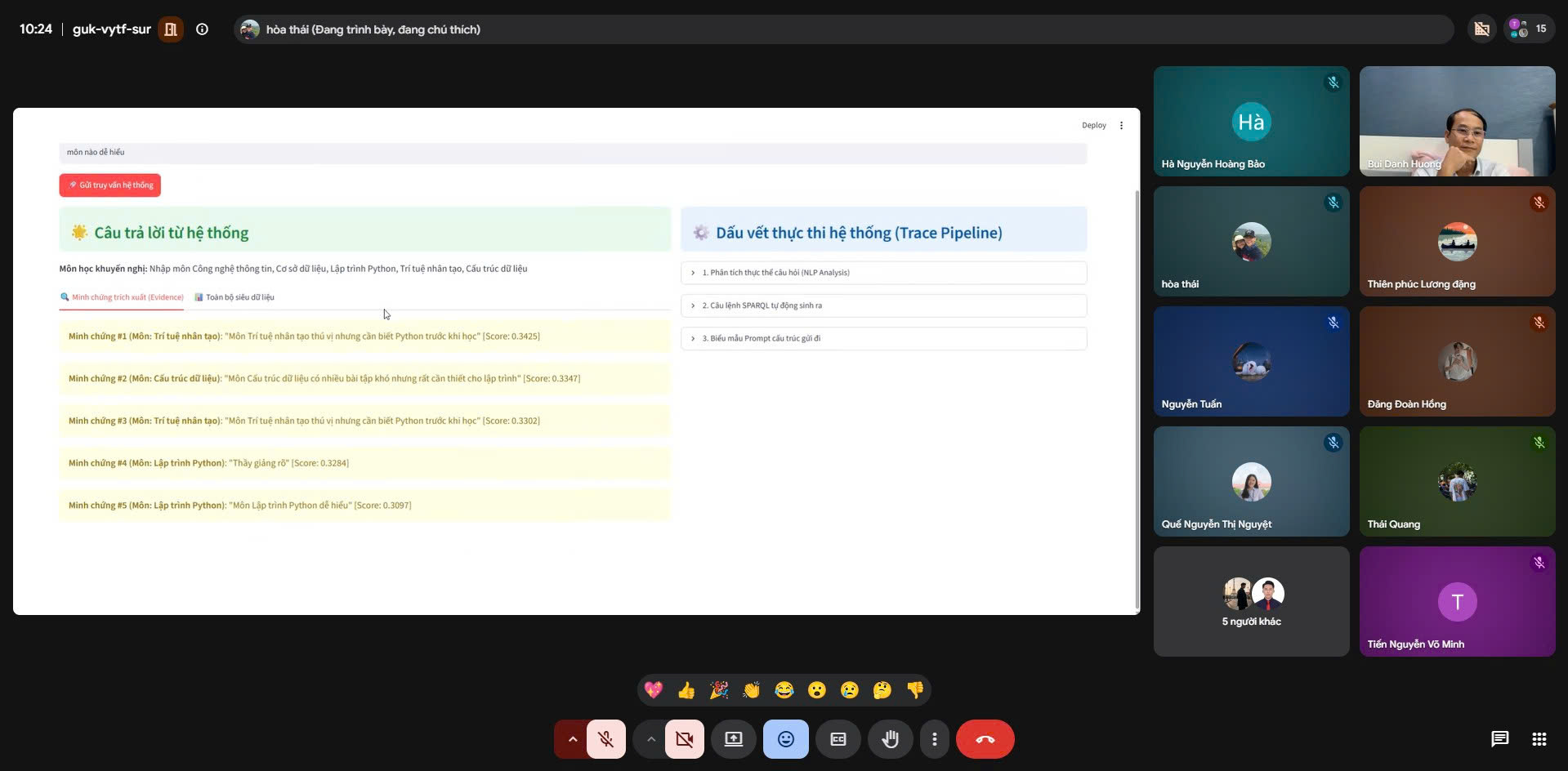
In class, students observed a prototype Smart Course Advisory System, which allows users to ask natural-language questions and receive suitable course suggestions along with supporting evidence and data sources. The processing workflow was clearly demonstrated through the steps of question analysis, knowledge retrieval, context synthesis, and answer generation, helping to enhance the transparency and explainability of the AI system.
An inevitable trend in the AI era
The combination of Ontology, Knowledge Graph, and large language models (LLMs) is considered one of the important development directions for the next generation of AI. Instead of relying entirely on training data, AI systems can draw on verified knowledge sources, helping to improve the accuracy, traceability, and reliability of results.
Through the Knowledge Base Systems course, students are not only equipped with foundational knowledge of knowledge representation but also have the opportunity to access technologies that are being widely applied in fields such as smart education, digital transformation, data analysis, and artificial intelligence.
This knowledge will serve as an important foundation for students to continue researching and developing AI solutions that are more explainable, transparent, and trustworthy in the future.